Monday, November 16, 2015

First Lake Run Brown of Fall

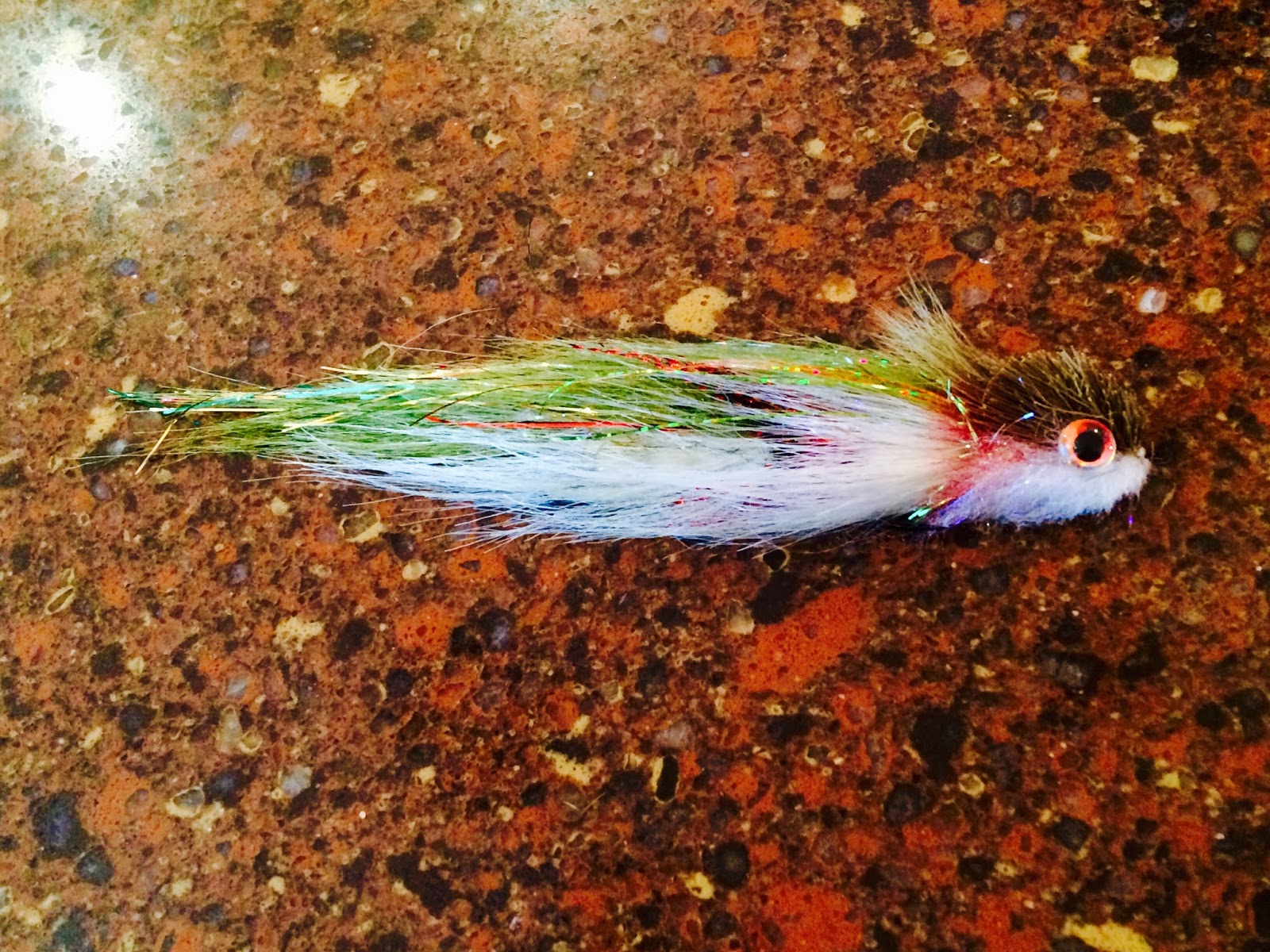
This is my first fish on the swing this season.  She's a cute little lake run brown, pretty fresh from the lake.  Although she had some color, her fins were clean and it appeared she had not been on a bed yet so the brown spawning run isn't over yet.  The most clear indication that she had not transitioned into spawning mode was that she chased down and hammered a 3.5 inch bad hair day tube fly!

I had made a lot of casts that morning with nothing to show for it, so once again persistence pays off in the swing game.  Also, she was sitting in a classic fall holding spot for river bound migrating fish - the tail-out of a relatively long run with moderate current.  However, this particular run had never produced a fish for me - ever.  Even so, I loved (now, even more so) this particular run.  It has the right speed, that slow to moderate walking pace.  It has the right depth, about 4 feet.  There are a few boulders throughout the run that provide current breaks but don't hinder the swing presentation.  The run sits just up from and down from long shallow riffle water so it seems to be a logical holding spot for resting migrating fish.  In short, in a river with limited ideal swinging water it seems perfect.  The fly swings beautifully in the run and you have enough room to make a full true skagit cast (which can be a luxury in midwest streams).  So the run is not only sound on paper it is also a particularly fun run to fish.

Accordingly, in spite of the poor track record, each and every time I go to this river I fish the run.  At first, I fished it because in light of all of its attributes, I was certain I would catch a fish out of it.  Then, after putting up a number of goose eggs - I mean never even a pluck - I just fished the run because I enjoyed fishing it.  Then the other day, a bright sunny day I might add, I approached the run as I had so many times before with excitement but very little confidence.  I worked the run in close, then out further, and progressively down the run as I had so many times before.  With each step, I thought to myself, "there should have been a fish there...and there...and there" as I had so many times before.  But then, this time, at the tail out I made a cast, then a small mend, and when the fly started to swing there she was.  As the line tightened in the current I felt the exhilarating unmistakable pull of an active fish.

People often say "it's all about the grab!" That's true, the grab is addictive and what ultimately converts people to the swing game. But what I love even more is the chess match between the fish and the angler that often occurs prior to the grab.  Sometimes the fish just hits the fly.  I've had many a steelhead do that.  In fact, we had an epic day in Michigan where a number of steelhead just hammered the fly.  One moment the fly was swinging through the run the the next a steelhead was ripping line.  This sort of take often happens at the end of the swing or the first strip or two as you set up your next cast.  Many other times the however the fish plays with its food a bit.  This commonly plays out with a pluck, a jab, a pull, generally any sort of quick tug on the end of the line.  My favorite scenario occurs when a pluck occurs at the beginning of a swing.  At that point you can visualize a steelhead tracking the fly setting up the kill but you have no idea when its going to happen - the anticipation is awesome!  However, the grab is not guaranteed and I have come across a couple tricks that have helped me seal the deal when a fish plucked but wouldn't commit.

1.  Extend your rod a bit during the hang-down.  If you got a pluck during the swing the odds are the fish is still sitting behind the fly as it dangles at the end to the swing.  By extending your rod and dropping the fly back I've found you can trigger a strike (I don't pretend to know why but it works).
2. Pop the rod tip - just short quick pops.  This will make the fly accelerate forward and up in the water column.  Presumably this makes the fly seems like a last ditch effort to escape triggering the kill instinct.
3. Some people change color I prefer to change size.  My position is they've committed to the color but the fly may be too long or large such that if the fish was able to hit the fly but miss the hook.  The point seems to be easier to get a hold of on a smaller pattern.
4. Take a small step down.  I've found if a fish hits a fly particularly hard and does not hook up it often times drops back in the run.  If I was taking a 3 steps down through the run I switch to 1 step.  so I make sure not to fish over an active fish that has dropped back.
5.  Fish the entire run and start over.  If I've located an active fish I fish that run at least one more time.  This is when I change the color or style of pattern.

The grab is exciting but enticing the grab is the fun part.  Once you know that there is a fish willing to chase a streamer it can be a challenge to convince it to eat but incredibly rewarding if you succeed.  In the case of this little brown the chess match was short lived.  She plucked early but sealed the deal a moment later about midway through the swing - love it.

Tight lines.

Nick

Monday, November 9, 2015

Craft Beer + Neighbor + Fly Fishing DVDs ='s Big Streamers


Recipe:
Rear Hook: 2461 Size 1
Rear Body: Reverse tied extra select craft fur (3-4 clumps tied from the hook bend to the hook eye)
Articulation: Beadalon and 3 small red craft beads
Front Hook: 2461 Size 1
Front Body: Reverse tied extra select craft fun (3 clumps but tied closer together than the rear body to add the appearance of bulk)
Gills: Red hackle flash
Head: Deer body hair over wool and a 3D eye.

Story:
So my wife had a girls night in the city this past weekend.  That meant the fly tying material could sneak out of the basement.  Fly tying is always better in the company of friends and beer, so I summoned my neighbor and fellow fly fishing junkie.  Nothing was on the agenda other than letting the creative juices flow.

We both started playing around with hollow tied craft fur.  The pictured fly started as a single then the beadalon came out.  But what to do with the head? My neighbor was using craft fur and flash for the head of his flies (he added some blue ice dub in front of a dark olive craft fur head, which looked awesome!).

When I got to the head stage of the process I wasn't sure what to do.  Initially, we talked about all wool, which would push a lot of water as with craft fur but would add undesired weight.  Then we discussed deer hair, which would add some movement to the fly but by the same token buoyancy.  After some additional thinking juice, I came to a deer hair over wool combo.  Fly designs incorporating this tying strategy have popped up on the web from time to time.  In fact, I believe Orvis carries a pattern with this style of head.  This design will push water and add some additional movement to the fly but in less tying time and with less buoyancy.  Moreover, The hollow tied body gives a cool, realistic "in the round" baitfish profile.

Fortunately, craft fur, wool and deer body hair are all materials that are cheap, easy to get a hold of, and come in a variety of colors so your creativity can go wild with this one.  As an added bonus, this is an articulated pattern that you can create without the end product using $30 of material.  As an aside, you can certainly tie this as a single rather than a double to have a 3 inch fly when 6 inches seems a bit excessive.


P.S. This is the prototype. For those into critiquing flies, I admit there are plenty of imperfections.  This one was more about seeing where the design went for fun rather than business.  Imperfections aside, I'm confident this dog will hunt.

Friday, July 10, 2015

9 months until Tarpon Season 2016

Ok, it's a long way away. But may as well start filling boxes. This fly is near and dear to me. Certainly nothing special, just a classic splayed wing keys style fly in the notorious black and purple combination.  Just a couple inches long but an absolute killer. I like to put eyes on everything but this style of fly; for no reason other than I like how they look without eyes.  Also, I don't like filling the shank with thread as some tiers do, again for no substantive reason. 

There are a couple things to keep in mind when tying these flies, which I believe enhance their fishability. First, try to tie the tail feathers straight back (or propped up slightly for a shrimpy effect) as inline and even as possible. When wet, these feathers wiggle all over the place so perfection is not necessary. However, feathers that are extremely off line may cause the fly to spin and that is no bueno. Also, the front hackle is made in two parts. The first hackle, which is fluffy, is the base or after shaft of a saddle hackle. The fluffy after shaft feathers are like short marabou fibers and when palmered they give the small fly some extra movement and bulk. The front hackle is the tip of the hackle. When palmered the tip creates a stiff front that pushes water. They combine to add movement and bulk helping the tail feathers swim when stripped. 

This pattern got me my very first poon and I have loved it ever since.

Hook choice is a matter of personal preference. However, when tarpon fishing  the weight of the hook can be a factor.  So, I like to tie flies on owner Aki hooks (heavy), sc15-2h (almost as heavy), and sc15 (light). The 2h hooks are big for their  size designation which is also something to consider.  Tarpon can be all over the water column and getting the flies in front of their face quickly is critical. And you never know what mood they will be in until you get there.

Whether you're fishing the beach or the back this fly is tough to beat.

Tight lines.

Sunday, May 3, 2015

Tarpon 2015

Well, Tarpon 2015 was as bad as Tarpon 2014 was great. Saltwater fish, especially migrating tarpon, are particularly sensitive to tides and the weather. Tides vary but are perdictable; the weather is not. A consistent weather pattern is good, a changing weather pattern is bad. Unfortunately, our weather was in a state of flux, a cold front rolled in when we got down to south Florida and rolled out as we are leaving. The front brought in unusual winds, waves, and cloudy water. If we were fishing for a resident species these conditions are tough. However, when you are fishing for migrating fish these conditions are impossible. The tarpon which were around in huge numbers a week ago, vanished. My dad fished 5 days, had 6 shots and jumped 1. I fished 2 days, had 4 shots and got 2 eats but didn't pin either, nothing you can do about that. These fish were small juveniles, we didn't see a mature adult.
The backcountry is such a special place so it really doesn't matter but Mother Nature screwed us this year.
If you are heading to south Florida now, not to worry. Winds have stabilized and returned to an east north east pattern. In turn the water has started to clear. I'm confident the tarpon will be back in force in a day or two. 
Until next year . . . F*cking bummer.

On the flip side I got to fish with my dad, a great guide and friend, in my favorite place in the world, and doing what I love to do - hard to complain about that.

Tight lines.

Silver lining(ish): got a cool new hat out of the deal.
Them tarpon are in for a world of hurt next year.

Wednesday, April 1, 2015

Worm Hook Shad (or Bluegill or Alewife) Streamer

I can't wait to take this fly for a swim!  I have played with worm hooks as a base for streamers before.  Over the years, fly tyers have turned to conventional hooks to create unique keeled fly patterns.  Most recently Hud's Bushwacker has gained some notoriety.  The Bushwacker is an unweighted streamer tied on a wide gap worm hook.  However, the Bushwacker was not the first to take advantage of the keel-hook design.  For instance, a few years ago Kelly Galloup devised the Stacked Blonde and the Peeler (a cone-head Stacked Blonde), both of which were tied on a now extinct keeled hook and are now tied on off-set worm hooks.  And I believe east coast striper guys have been tying these kinds of flies for years.  There are many more examples as any simple google search will prove.  In any event, with these flies as my inspiration I have developed the fly pictured above.  

This particular fly is designed to imitate a shad or alewife.  By adjusting the colors you could easily have a bluegill, crappie, or any deeper bodied bait fish (a pin fish or sardine for the florida flats).  The fly's length is relatively short - only about 3" - 3.5".  However,  the wide gap hook gives the fly a particularly deep profile (though it will certainly slim down in the water).  I envision a large lake brown taking particular interest as they cruise the nearby harbors for food.  Or a largemouth bass cruising the shallows of a lake.  I do not have a Flymen Fish Mask but using a mask instead of a skull would probably make a great slow sinking version.  Coupled with a jerk-strip retrieve, this fly should dart, dip, and weave like a prize fighter (or better yet a fleeing baitfish!).  Here is the recipe and tying instructions:

Hook: VMC Extra Long Neck Wide Gap Hook (the extra long neck is pretty critical for an adequate base) 3/0
Belly: Medium Krystal Chenille in pearl
Gills: Pink Ice Dub
Under Wing: Three sparse bunches of white buck tail and pearl flash 
Second Under Wing: 2 gray saddle hackles
Over Wing: Gray Marabou
Hear: Medium Fish Skull
Eyes: 7/32" Silver 3D Eyes

Place the hook in the vice. Secure the chenille and wrap towards the hook eye.  Tie off the chenille where the off-set of the hook begins.  Cover the off-set with a small rope of pink ice dub.  At this point all that should remain bare is the neck of the hook.  Note, with this fly it is critical to be in control of the amount of material and thread.  At the beginning of the neck, tie in a sparse bunch of buck tail.  Tie in the buck tail on the side of the hook that faces you.  Do the same on the opposite side.  Then, add the third bunch of buck tail on the top of the first two, using the secured buck tail as a base.  The buck tail that is covered by thread should take up about 1/2 to 2/3s of the neck of the hook.  Secure a bit of flash over top of the buck tail.  Secure one saddle on each side of the hook.  The saddle feather should be tied again using the thread covered buck tail as a base. Moving slightly forward towards the eye, secure a tuft of marabou on top of the hook.  Whip finish the fly and cut the thread.  If you have maintained discipline with the amount of material and thread, then the Skull should slide over without event.  If necessary add a thread dam in front of the Skull if desired.

The tying sequence is a little tough to explain.  I will try to post a Step-By-Step in the coming days.

Tight Lines. 


Friday, March 13, 2015

Don't Be Afraid of Flash


If you can't tell, I love Flashabou.  It moves great in the water and is easy for fish to track down.  I caught my personal best steelhead swinging the tube fly pictured above - when the water temp was hovering right around freezing!  I call the fly an egg sucking prom dress.  The fly pattern stems from designs by Scott Howell, Kevin Feenstra, and Jeff Hubbard.  Funny story about this fly, I tied it because I was bored.  I like tube flies for patterns that are tied in the round, that is they look the same from every angle and do not have a clear top or bottom.  For example, the flash fly pictured above or a marabou spey.  This is a simple tie and is very effective.

First, secure the tube to the vice.

Second, create a small dubbing loop of arctic fox and make two or three wraps stroking the fibers back with each wrap.

Third, tie in a strung saddle hackle feather directly in front of the arctic fox, leaving no space between the two materials.  Palmer the hackle feather forward with 4-6 wraps.  The fox and feather form a base that keeps the flash from collapsing when wet giving the fly a fuller profile.

Fourth, cut a generous portion of Flashabou.  Tie in the Flashabou reverse or hollow style all the way around the tube.  Pull back the flash fibers and make a VERY small thread dam to hold the fibers in place.

Fifth, tie in and palmer a mallard flank feather in front of the flashabou - two or three turns.  Again, stroke the feather fibers back with each wrap.

Sixth, add clumps of ice dub.  If you wanted to add weight to the fly you could slip on a cone or add small dumbbell eyes.

The color combination pictured above is great in winter but experiment.  Don't be afraid of flash.  Think about a spoon or in-line spinner.  Those create far more flash and commotion than a this fly ever could and those are two of the most effective lure designs ever created.

Tie some up and give them a swim.

Tight lines.

Wednesday, March 11, 2015

Evolution of Modern Streamers

Large predatory fish such as bass, trout, and pike species eat smaller fish. Predatory fish are the target of anglers for their strength and sport and have been for centuries. Over time, fly fishermen developed flies to take advantage of a predatory fish's ferocious tendencies.  While I am no fly fishing historian, I believe it was Isaac Walton who coined the term artificial fly in his book the Compleat Angler written in the 17th century.  However, I understand fishing with feathers tied to hooks dates to earlier human history.   Isaac Walton referred to the palmer fly giving rise to the venerable Woolly Worm.  The Woolly Worm, evolved into the ubiquitous and ambiguous Woolly Bugger, which may be the most common or at least most recognized streamer available.

The Woolly Bugger can imitate a minnow or swimming insect depending on the size of hook and color scheme.  Suffice to say, the use of flies to imitate smaller fish or swimming prey dates back to the beginning of fly fishing history.

www.flysandguides.com
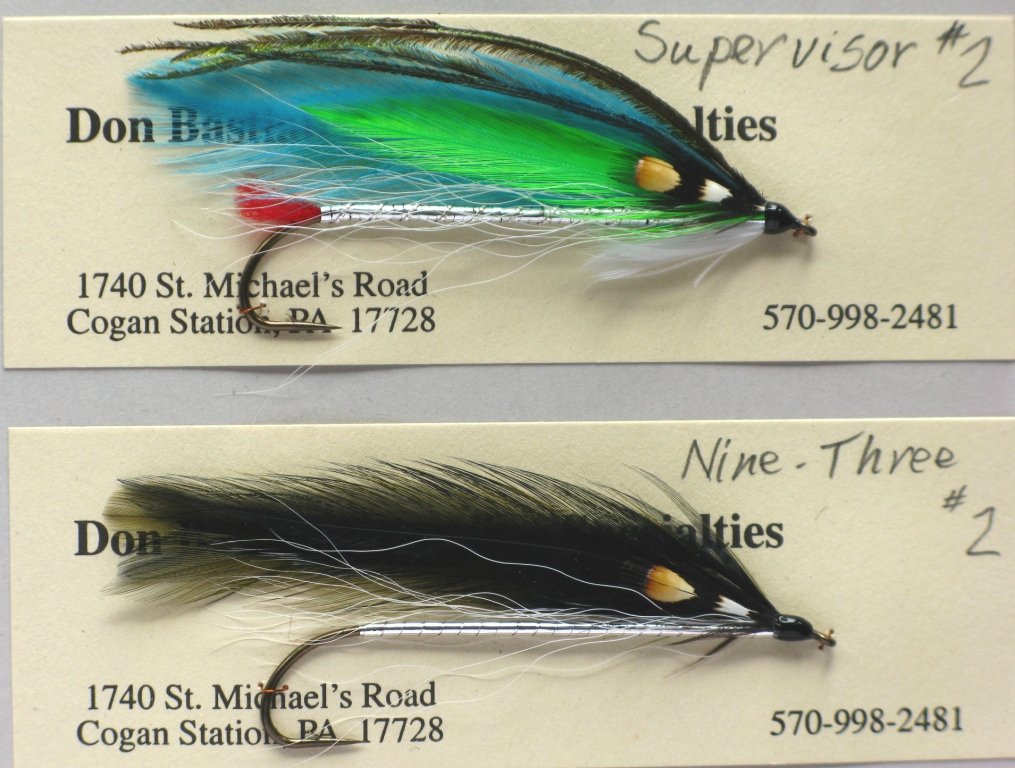
Beyond the Woolly Bugger, fly fishermen developed feather-wing streamers ("featherwings"), which were far more complicated and either represented a particular baitfish or worked as an attractor pattern such as the images below. 
(obtained from http://hatchesmagazine.com/blogs/Hatches/2012/07/19/fly-tying-class-at-l-l-bean-don-bastian-september-21st/)
Classic featherwings were as much pieces of art as they were fishing tools. The flies were sparse and tied on extremely long shanked hooks.  From my informal research, this style of fly represented a fly angler's attempt to engineer a longer streamer with a larger profile*.

A practical observation reveals a few structural weaknesses in these flies.  First, extra long shanked hooks create a lever which can pry the hook loose from a fishes jaw during the fight.  Second, these flies do not use materials which allow for inherent motion with or without angler encouragement. And third, the fly is relatively two dimensional with very little footprint in the water and insubstantial profile.  Featherwings simply swim horizontally through the water and if paused the fly will remain motionless and slowly sink; relatively static.  The Woolly Bugger incorporates marabou as a tail which never stops moving, each fiber appears to wiggle when in the water.  However, like feather-wing streamers, the Woolly Bugger swims horizontally through the water and its size is limited to the length of the hook shank.  Both feather-wing streamers and the Woolly Bugger and its family tree caught fish, however the effectiveness of the fly patterns was limited.

In my opinion, the next major evolution of streamer patterns was the Clouser Minnow created by Bob Clouser for smallmouth bass.
  (www.charliesflyboxinc.com)
Bob Clouser added weight to the front of a bucktail streamer two create a jigging effect.  This design allowed a streamer to dive when the angler stops imparting action to the fly, thus the fly could swim horizontally then vertically.   The added weight also allow the fly to be fished at a variety of depths.  Additionally, the jigging effect gave an erratic wounded effect to the fly, which would stimulate an attack.

While incorporating weight certainly advanced streamers and streamer fishing, there was still room to grow - enter Kelly Galloup and company**.  Mr. Galloup operated the now closed Troutsman Fly Shop out of Traverse City Michigan.  I believe that shop really started to change the streamer game.  Michigan trout streams do not generate the volume of big trout as western streams.  Probably because the western streams have more prolific bug life.  However, when a brown gets to be a certain size (in Michigan and out west) they primarily eat other fish and ignore insects but for a few select hatches.  Big browns do not eat very often but when they do they will eat other trout, lampreys, mice, frogs, basically anything that will fit in their mouth and Michigan fly tires started experimenting with streamer design to trigger a feeding instinct.  For instance, Galloup's Zoo Couger is a basic Muddler style pattern with an extremely large deer hair head that pushes water and a mallard flank feather along its back.  These two designs cause the fly to cut through the water in erratic and unpredictable ways, dipping, diving, wobbling, gliding at odd angles when stripped giving it both a large auditor footprint as well as a life like action.  Unlike the Clouser Minnow, the Zoo Couger didn't simply "jig" but it fought the water and struggled against the current giving it a truly attractive swimming motion.

Next came articulation.  By using a wire or monofilament loop glued to the hook, a fly tier could create a jointed fly that resembled the swimming motion of a deadly jointed Rapala and more importantly an injured baitfish.  This design was revolutionary for two reasons.  One, the articulation point gave the fly exceptionally lifelike movement in the water.  When coupled with materials such as marabou like the Woolly Bugger, and weight like the Clouser Minnow, the fly tier can design a fly that appear to swim mostly on its own without much intervention by the angler.  And two, the angler can make an extremely large fly with short shanked hooks, thus increasing the hook to catch ratio, thereby eliminating some of the structural issues of the classic featherwings.

The articulated streamer is the most recently evolution and tyers are continuing to tweak the design. A recent modification was created by Tommy Lynch, a fly called the Drunk & Disorderly ("D&D"). This fly takes designs from the Heifer Groomer (an articulated Zoo Cougar), the Swimmin' Jimmy (a Heifer Groom that uses an offset front hook).  Below are some of my versions of a D&D.

 What's different about this fly is the use of an inverted wide gap swimbait hook upon which the deerhair head is tied.  Also, the wide deerhair head is cut at a sharp angle causing it to dive and swim erratically.

I'm finding that the use of nontraditional fly hooks is perhaps the most recent small step in the evolution of the streamer.  With the flow of information now, I can't wait to see what comes next.

Here is a video which shows how to tie a D&D:

Tight Lines.


*There is a history to these flies, a history that has been well developed by academics and one that I am not qualified to discuss.  My observations regarding these flies are purely based on my fishing experience.

**Again, I am no historian and I am certain there were a number of creative streamer tying evolutions between the Wooly Bugger and Kelly Galloup, which I have omitted but such detail is for another post.